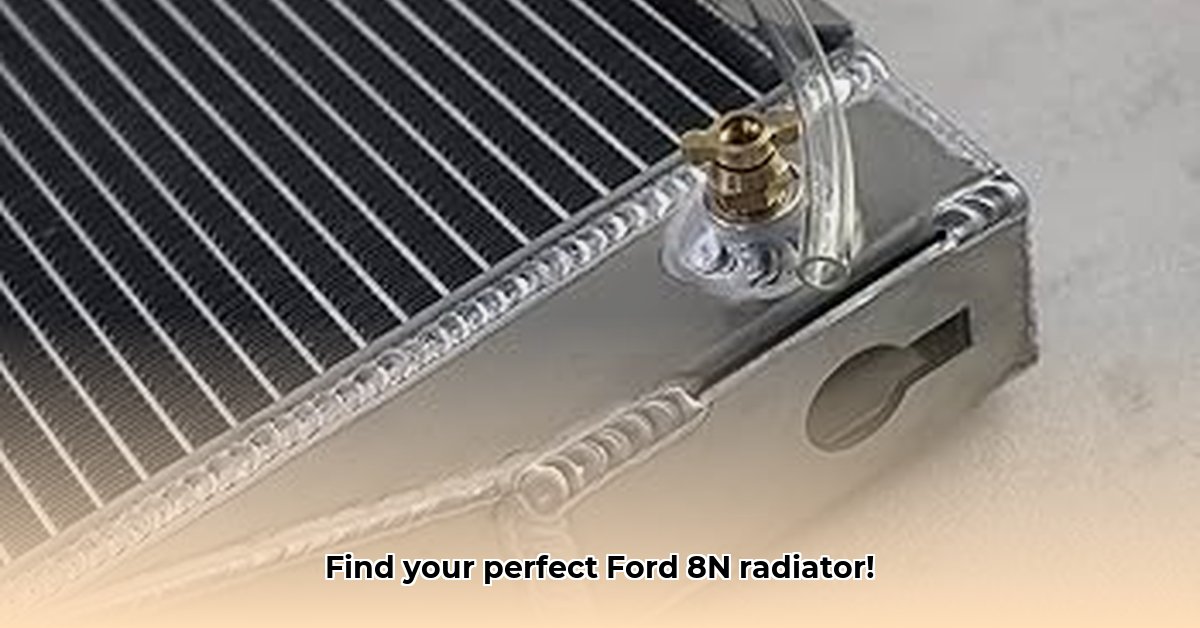
Keeping your classic Ford 8N tractor running smoothly requires a properly functioning cooling system, and the radiator is its heart. A faulty radiator leads to overheating, potential engine damage, and costly repairs. This comprehensive guide provides a step-by-step process for selecting and installing a replacement radiator, ensuring your 8N stays cool and operational. For more information on maintaining your Ford 8N, check out these helpful resources.
Understanding Radiator Types & Selection for Your Ford 8N
Choosing the right radiator for your Ford 8N depends on your budget, the condition of your tractor, and your restoration goals. You'll primarily encounter three types: Original Equipment Manufacturer (OEM), high-quality aftermarket, and restoration-quality aftermarket. Each offers a unique balance of cost, performance, and fit.
OEM Radiators: These are the original Ford radiators, often made of durable copper and brass. They offer the best fit and typically the longest lifespan, but they're also the most expensive and can be difficult to find. Finding an OEM radiator in good condition for older tractors like the 8N can be a challenge.
High-Quality Aftermarket Radiators: These provide a more affordable alternative, often constructed from aluminum. They generally offer good cooling performance but may not perfectly match the original aesthetic or construction. Quality varies greatly between manufacturers, so careful research and reviews are crucial.
Restoration-Quality Aftermarket Radiators: Primarily geared toward restoration projects, these radiators strive for an accurate recreation of the original Ford design, often using copper and brass. They offer a balance between cost and authenticity, but remain more expensive than typical aftermarket options.
Here's a comparative table to aid your decision:
| Feature | OEM | High-Quality Aftermarket | Restoration-Quality Aftermarket |
|---|---|---|---|
| Material | Typically copper/brass | Often aluminum | Usually copper/brass |
| Construction | Robust, high-quality materials | Varies; often lighter construction | Closely mirrors OEM construction |
| Tube Count | Usually higher (better cooling) | Varies; may be fewer than OEM | Often higher, similar to OEM |
| Fit | Guaranteed perfect fit | Usually good, minor adjustments may be needed | Very close fit; minimal adjustments needed |
| Price | Highest | Moderate | High |
| Warranty | Typically longer | Varies considerably | Varies considerably |
| Longevity (estimate) | Longest potential lifespan | Moderate lifespan | Long potential lifespan |
Considering Your Needs: Do you prioritize functionality, a perfect fit, or historical accuracy? The best choice aligns with these priorities and your budget.
Step-by-Step Radiator Replacement Guide for Your Ford 8N
Replacing your Ford 8N's radiator is achievable with careful planning and execution. Always consult your tractor's manual for specific instructions and safety precautions.
Step 1: Preparation (Crucial for Success)
- Park the tractor on a level surface and engage the parking brake.
- Let the engine cool completely to prevent burns. This is non-negotiable for safety.
- Drain the old coolant into a suitable container. Drain plugs are typically located at the bottom of the radiator and engine block.
- Carefully disconnect the radiator hoses. Photographing the connections before disconnecting them is highly recommended.
- Disconnect any electrical connections to the radiator.
Step 2: Removing the Old Radiator
- Access to the radiator may require removing surrounding components. The exact process depends on your 8N's model year.
- Gently remove the old radiator, carefully noting its mounting and orientation. Examine the old radiator for clues that can help you understand the cause of its failure and potentially prevent future issues.
Step 3: Installing the New Radiator
- Position the new radiator, ensuring it aligns perfectly.
- Secure the radiator using original or new, appropriately sized mounting hardware. Ensure it's firmly in place.
Step 4: Reconnecting Hoses and Components
- Reconnect all hoses and electrical connectors, referencing your photos or the tractor manual. Ensure a tight, leak-proof seal on all connections.
Step 5: Refilling and Bleeding the Cooling System
- Add fresh coolant, following the manufacturer's recommendations for type and quantity. Consult the owner's manual for specific instructions.
- Bleed any trapped air from the system. This is vital for efficient cooling. There's usually a bleed screw on the engine block or radiator. Run the engine briefly to check for leaks.
Step 6: Testing and Final Inspection
- Run the engine, monitoring the temperature gauge. Check for leaks around hoses and radiator connections. Address any issues immediately.
Beyond the Radiator: Essential Related Components for Optimal Performance
Replacing only the radiator might not be enough. Worn hoses and clamps can compromise the cooling system's effectiveness. Consider replacing these components concurrently:
- Hoses: Aging hoses become brittle and prone to leaks. Replace them with high-quality, properly sized equivalents.
- Radiator Cap: A faulty cap can disrupt system pressure, impacting cooling efficiency. Replace it with a new cap to prevent pressure-related problems.
- Clamps/Mounting Hardware: Rusty or damaged hardware should be replaced for a secure and reliable installation.
Preventative Maintenance: Extending the Life of Your Radiator
Regular upkeep significantly extends your new radiator's lifespan:
- Regular Coolant Flushes: Flushing and replacing the coolant every two to three years removes contaminants and prevents corrosion.
- Visual Inspections: Periodically check the radiator for leaks, damage, or corrosion. Early detection can prevent major problems.
Conclusion: Keeping Your Ford 8N Running Cool and Efficient
Replacing your Ford 8N's radiator is a manageable task with clear instructions and attention to detail. By following these steps and performing regular maintenance, your tractor will operate at peak efficiency for many years. Remember, a properly functioning cooling system is essential for preventing costly engine damage.